Why Quiet Planning Is Being Talked About More Often
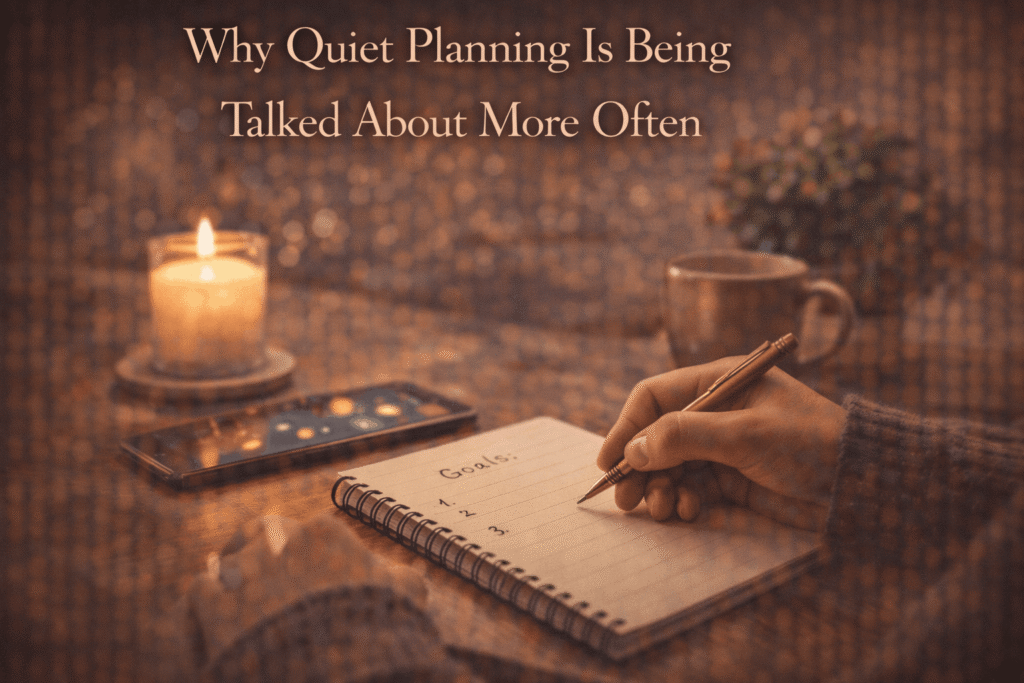
Quiet planning is being discussed more often as people look for calmer ways to manage work and life. Instead of detailed schedules and strict productivity systems, many are choosing simple planning that leaves room for flexibility. The idea feels less rigid and more realistic.
This topic is coming up now because many people feel overwhelmed by constant planning and re-planning. Digital calendars, reminders, and task lists can become stressful when they are too full. Quiet planning offers a softer approach that feels easier to maintain.
Rather than focusing on doing everything, quiet planning focuses on deciding what truly matters each day. That shift is why more people are paying attention to it.
Background or Context
Quiet planning refers to a low-pressure way of organizing time and tasks. It avoids overloading schedules and leaves space for unexpected changes. Planning still exists, but it is lighter and more forgiving.
Traditional planning systems often aim for efficiency and control. They break days into blocks and track progress closely. While this works for some, it can feel exhausting for others, especially when plans change.
Quiet planning exists as a response to that pressure. It values clarity over control and intention over strict structure. People talk about it because it feels more aligned with how life actually works.
Why It Matters or Why It’s Growing
This idea matters because many people struggle to keep up with complex planning systems. When plans fail, frustration builds and motivation drops.
Quiet planning is growing because it reduces that tension. People are realizing that planning should support life, not dominate it. A simpler approach feels more sustainable over time.
It is also growing as people reassess productivity. Instead of measuring success by completed lists, they focus on steady progress and mental ease.
How It Affects People or Daily Life
In daily life, quiet planning often means setting fewer priorities. People choose one or two important tasks instead of long lists.
This approach can reduce stress and improve focus. When plans are flexible, people feel less guilty when things change.
Quiet planning also affects mindset. It encourages patience and acceptance rather than constant urgency.
Quiet planning is being discussed more because it reflects real experiences of overload. It offers a calmer way to organize time. By planning with flexibility, people find routines that feel easier to live with.

Post Comment