What Cognitive Overload Means and Why It Happens
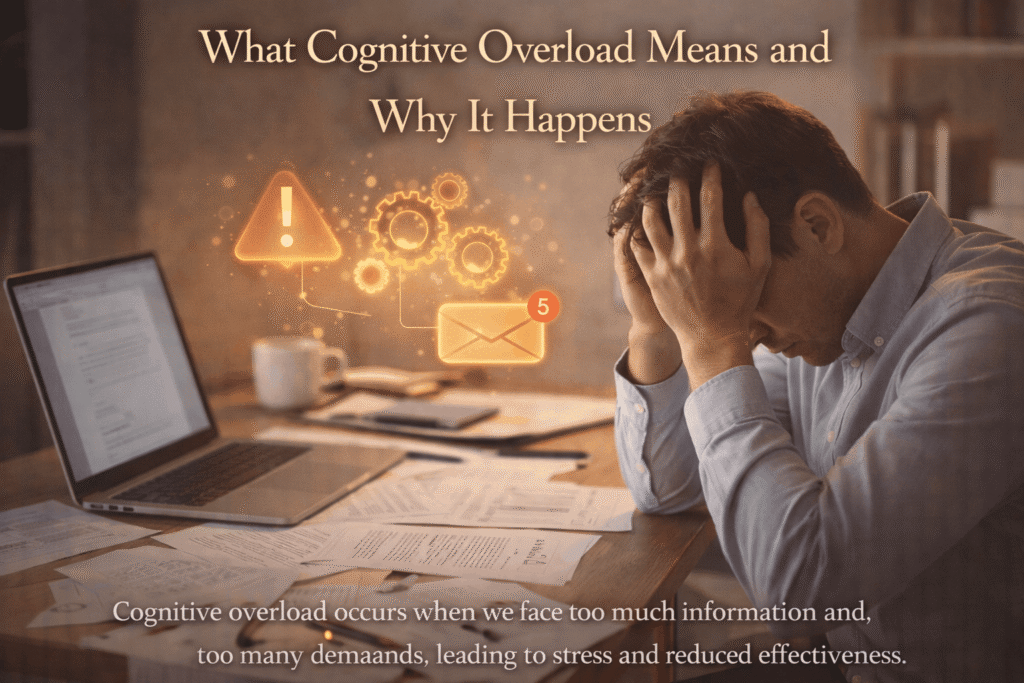
Cognitive overload occurs when the brain receives more information than it can process comfortably. This can lead to confusion, fatigue, and difficulty focusing.
Many people experience this feeling daily without knowing why. Understanding cognitive overload helps explain modern mental strain.
The concept highlights the limits of human attention.
Background or Context
Cognitive overload became more common as information sources multiplied. Emails, notifications, and constant updates compete for attention.
The brain can process only a limited amount at once. When that limit is exceeded, performance declines.
The term exists to describe this mental pressure and its effects on thinking.
Why It Matters or Why It’s Growing
Cognitive overload matters because it affects decision-making and memory. Tasks feel harder when the mind is overwhelmed.
It is growing as digital engagement increases. People are exposed to more information than ever before.
Awareness of cognitive overload helps explain why breaks and focus are important.
How It Affects People or Daily Life
In daily life, cognitive overload can cause distraction and frustration. Simple tasks may take longer.
People respond by reducing input, organizing information, or setting limits on digital use.
Recognizing overload helps people adjust habits and regain clarity.
Cognitive overload explains mental fatigue in information-heavy environments. Understanding it supports better focus. Managing input helps restore balance.

Post Comment