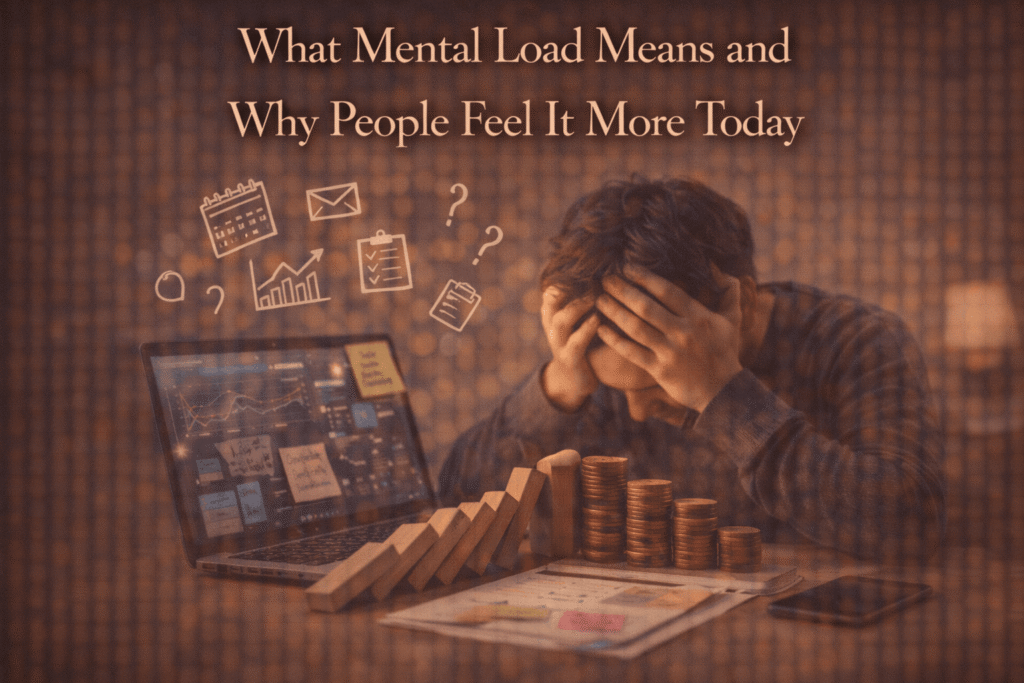
Mental load refers to the invisible effort of keeping track of tasks, responsibilities, and decisions. It includes planning, remembering, and anticipating needs.
Many people experience mental load daily, even when they are not physically busy. It explains why people can feel tired without obvious reasons.
Understanding mental load helps explain modern fatigue.
Background or Context
Mental load has always existed, but it increased as responsibilities became more complex. Work, family, and digital life added layers of thinking.
Unlike visible tasks, mental load is ongoing. It does not stop when work ends.
This concept exists to explain the strain of constant awareness and responsibility.
Why It Matters or Why It’s Growing
Mental load matters because it affects well-being. When the mind is always active, rest becomes harder.
It is growing because modern life requires constant coordination. Notifications and expectations keep attention engaged.
Talking about mental load helps people recognize hidden stress.
How It Affects People or Daily Life
In daily life, mental load shows up as forgetfulness or irritability. Simple tasks feel heavier.
People respond by simplifying routines or sharing responsibilities. Awareness helps reduce pressure.
Mental load also changes how people value rest and quiet.
Mental load explains why people feel tired even without physical effort. Recognizing it helps create balance. Understanding this concept supports healthier daily habits.