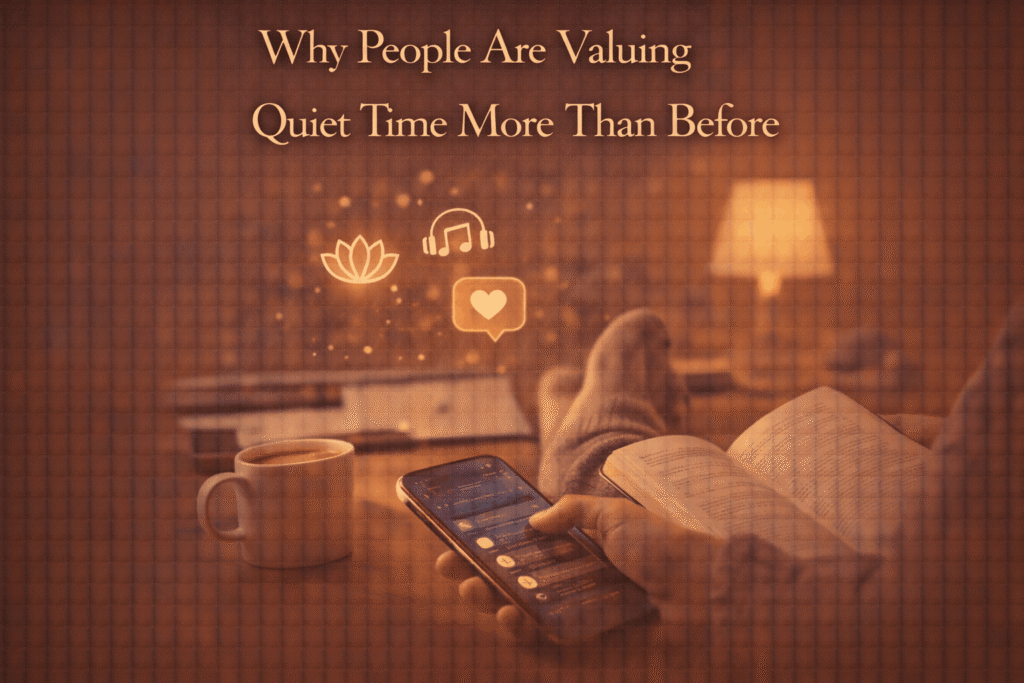
Quiet time is becoming more valued as people seek relief from constant stimulation. Silence and stillness feel restorative in busy environments.
This shift is not about avoiding activity, but about creating space to reset. Quiet moments are being treated as necessary rather than optional.
Cultural conversations around balance have helped bring attention to this change.
Background or Context
In earlier periods, constant activity was often praised. Busy schedules and full calendars were signs of productivity.
Over time, this pace became tiring. Noise, information, and expectations left little room for rest.
Valuing quiet time emerged as a response to this overload. It represents a desire for calm and reflection.
Why It Matters or Why It’s Growing
Quiet time matters because it supports mental clarity. Without it, stress accumulates and focus declines.
The idea is growing as people notice benefits such as improved mood and better sleep. Small periods of quiet can make a difference.
Cultural attitudes toward rest have also shifted, making quiet time feel more acceptable.
How It Affects People or Daily Life
In daily life, people create quiet moments by reducing screen use or choosing calm activities. These habits support relaxation.
Quiet time also affects mindset. It encourages slowing down and paying attention to the present.
These changes help people feel more grounded.
People are valuing quiet time more because constant stimulation is exhausting. Quiet moments restore balance. This shift reflects a calmer approach to daily living.