Why “Low-Stimulation Evenings” Are Trending
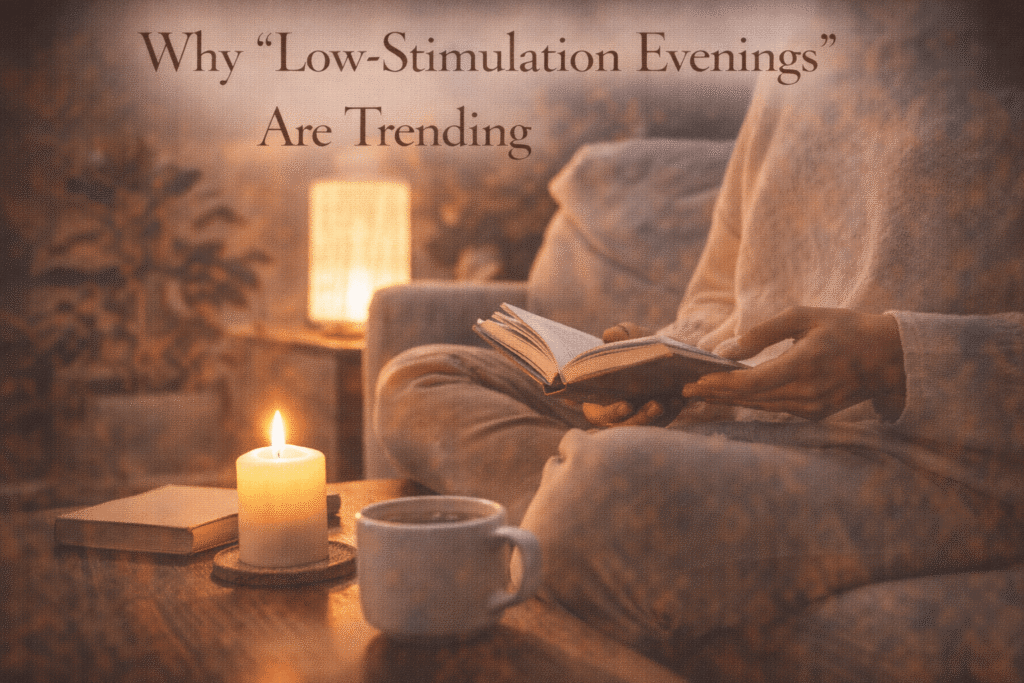
Low-stimulation evenings are trending because many people feel mentally exhausted by the end of the day. After spending hours on screens, handling messages, and switching between tasks, doing less feels like a relief.
This trend is not about strict rules. It simply encourages quieter activities such as reading, light stretching, journaling, or sitting without constant background noise. For some, it even means turning off notifications for a few hours.
People are sharing how these evenings help them slow down. Many say they sleep better and feel calmer the next morning. Even replacing one busy evening with a quieter one can make a noticeable difference.
Another reason this trend is growing is burnout. Productivity culture often pushes people to stay active late into the night. Low-stimulation evenings push back against that idea.
Low-stimulation evenings are trending because they offer rest without pressure. There is no goal to achieve, only space to unwind.

Post Comment