Why People Are Talking More About Digital Boundaries
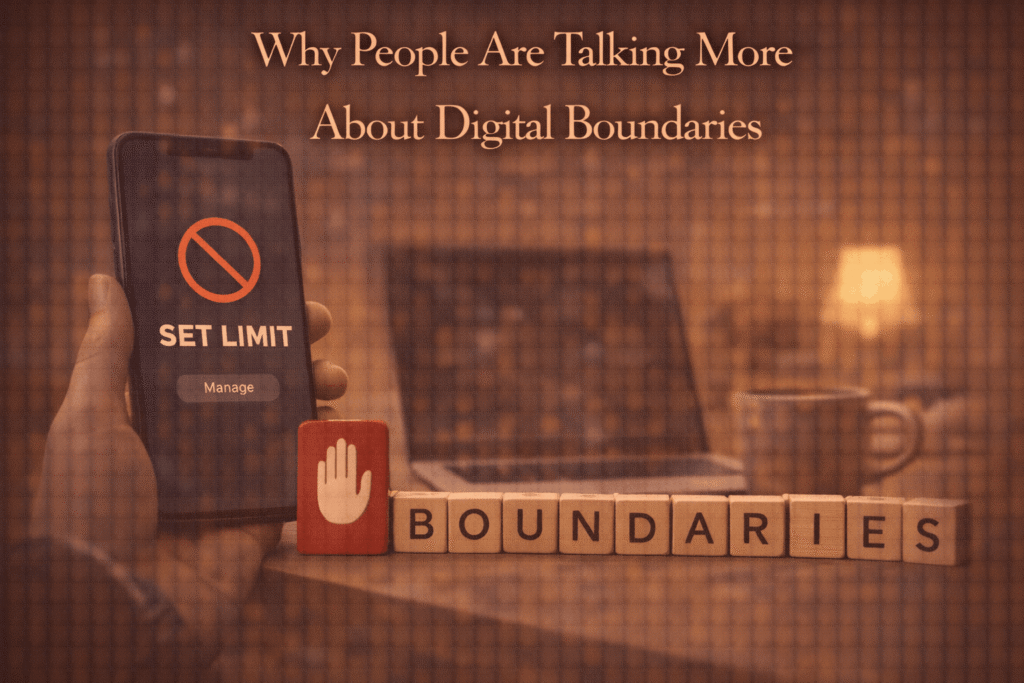
In recent months, digital boundaries have become a common topic in everyday conversations. People are talking about when to be online, when to disconnect, and how much access others should have to them through screens. This discussion is not loud or dramatic, but it keeps coming up in small, personal ways.
The topic feels relevant now because many people are experiencing a sense of overload. Messages, notifications, and online expectations do not stop at the end of the workday. As a result, people are starting to question how available they should be at all times.
Digital boundaries are being discussed more because they offer a way to regain control without completely stepping away from technology.
Background or Context
Digital boundaries refer to limits people set around their online presence and availability. This can include when they respond to messages, how often they check notifications, or which platforms they actively use.
In earlier years, being constantly reachable was often seen as normal or even expected. Smartphones and messaging apps made communication instant, and social norms adjusted quickly. Over time, this constant access became tiring.
The idea of digital boundaries exists to address this imbalance. It recognizes that while technology enables connection, it can also blur personal space if left unchecked. Talking about boundaries helps people rethink how they engage online.
Why It Matters or Why It’s Growing
Digital boundaries matter because they directly affect mental clarity and focus. Without limits, people feel pulled in multiple directions throughout the day.
This topic is growing because more people are noticing the impact of constant interruptions. Difficulty concentrating, delayed rest, and ongoing stress are common experiences linked to digital overload.
The discussion is also growing as workplaces and social groups become more aware of personal limits. Respecting boundaries is increasingly seen as part of healthy interaction rather than avoidance.
How It Affects People or Daily Life
In daily life, digital boundaries often appear as small choices. People delay responses, mute notifications during certain hours, or set aside screen-free time.
These habits can improve focus and reduce stress. When interruptions decrease, people feel more present in their activities.
Digital boundaries also affect mindset. They encourage intentional use of technology rather than automatic engagement, helping people feel more in control of their time.
People are talking more about digital boundaries because constant availability feels unsustainable. Setting limits helps protect focus and well-being. This conversation reflects a growing desire for balance in a connected world.

Post Comment